Podcast: Play in new window | Download (77.0MB)
Subscribe: RSS
Most RV owners spend plenty of time planning routes, researching campgrounds, and packing for their next adventure. But one of the most important trip preparations often gets overlooked: reviewing your RV insurance coverage.
The surprising truth? Some of the biggest RV insurance mistakes aren’t made by beginners. They’re made by experienced campers who assume they already know what’s covered.
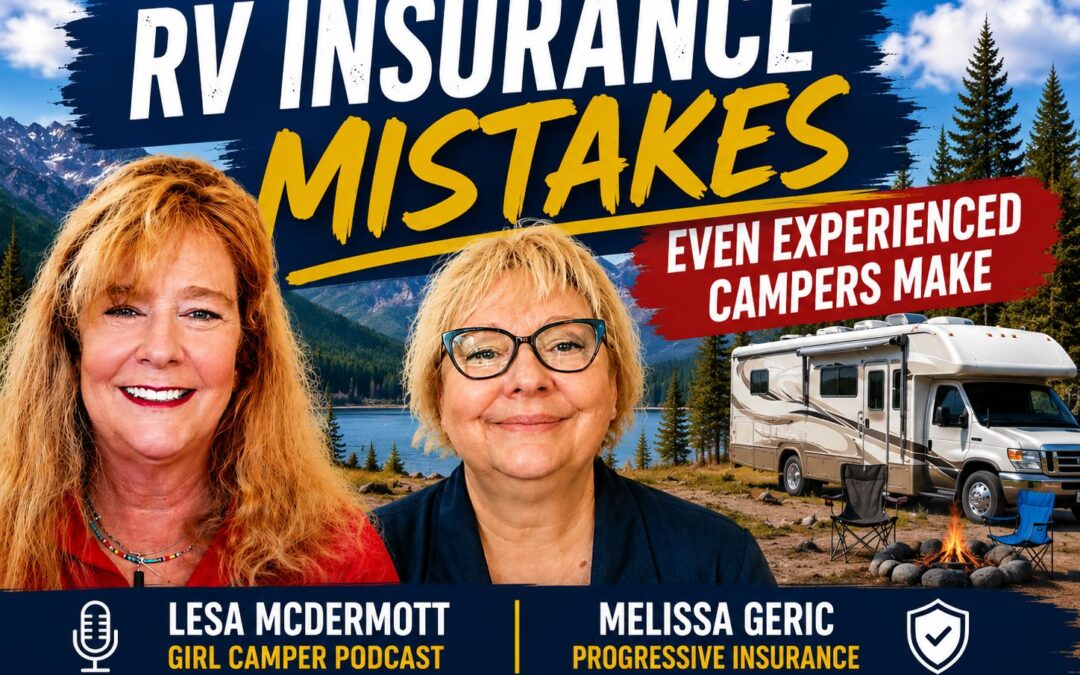
On a recent Girl Camper Podcast episode, I sat down with RV insurance expert Melissa Geric of Progressive Insurance to talk about common coverage gaps, lending your RV to friends, protecting upgrades like solar panels and bike racks, and what every RV owner should review before camping season.
Here are some of the biggest RV insurance mistakes to avoid.
Assuming “Full Coverage” Means Everything Is Covered
One of the most common misconceptions Melissa sees is the belief that “full coverage” automatically protects against every possible situation.
In reality, insurance policies include specific coverages, limits, and exclusions. Understanding what your policy actually covers is far more important than assuming you’re protected.
Before your next trip, review:
- Comprehensive coverage
- Collision coverage
- Liability limits
- Personal effects coverage
- Vacation liability coverage
- Roadside assistance options
- Emergency vacation expense coverage
Taking a few minutes to understand your policy today could save you a major headache later.
Not Carrying Enough Liability Coverage
Your RV isn’t a typical passenger vehicle.
Whether you’re driving a large Class A motorhome or towing a fifth wheel, you’re operating a vehicle that is significantly larger and heavier than most cars on the road.
That means an accident can result in substantial property damage and injury claims.
Melissa recommends carrying as much liability coverage as you comfortably can. It’s one of the most important protections on your policy and one that many RV owners don’t fully appreciate until they need it.
Lending Your RV Without Checking Your Coverage
Many of us have friends or family members who would love to borrow our RV for a weekend.
Before you hand over the keys, make sure you understand how your policy handles other drivers and occupants.
Questions to ask include:
- Is the person covered while driving?
- Should they be added to the policy?
- What happens if damage occurs while they’re using the RV?
- Are there restrictions based on how often the RV is being borrowed?
A quick conversation with your insurance agent before lending your RV can help prevent confusion if something unexpected happens.
Forgetting to Update Your Policy After Upgrades
Today’s RV owners are investing more than ever in upgrades.
Popular additions include:
- Solar panels
- Lithium batteries
- Bike racks
- Suspension upgrades
- Backup cameras
- Smart technology
- Interior remodels
The mistake? Installing these upgrades and never updating the policy.
If you’ve added value to your RV, your insurance company needs to know about it. Otherwise, you may not have enough coverage to replace those items after a loss.
As a rule of thumb, whenever you make a significant upgrade, contact your insurance provider and ask whether your policy should be updated.
Assuming Personal Belongings Are Automatically Covered
Think about everything you bring camping:
- Laptops
- Cameras
- Kayaks
- Cooking equipment
- Clothing
- Outdoor gear
- Camp furniture
Those items can add up quickly.
Many RV owners don’t realize there may be specific coverage available for personal belongings stored inside the RV. Reviewing your personal effects coverage can help ensure your gear is protected if it’s damaged or stolen.
Overlooking Roof Maintenance
One of the most expensive repairs on an RV is roof damage.
Your roof protects everything underneath it, yet it’s one of the most commonly neglected parts of an RV.
Experts recommend inspecting your roof at least twice a year and keeping records of maintenance and repairs.
Even simple steps like saving receipts for sealants, inspections, and repairs can be valuable if you ever need to file a claim.
Not Understanding Full-Time RV Coverage
Full-time RV living has become increasingly popular, but many people don’t realize it requires different insurance considerations than occasional camping.
If your RV serves as your primary residence, you may need coverages that function more like homeowners insurance, including increased liability protection and additional protections for your living situation.
If you’ve recently transitioned to full-time RVing, now is the time to review your policy.
Review Your Coverage Before Your Next Adventure
Insurance may not be the most exciting part of RV ownership, but it protects all the exciting parts.
Before your next camping trip, take a few minutes to review your policy and ask questions about anything you don’t fully understand.
Pay special attention to:
✓ Liability limits
✓ Personal effects coverage
✓ RV upgrades and modifications
✓ Roof protection options
✓ Full-time RV status
✓ Lending your RV to others
A little preparation today can help you focus on what really matters tomorrow: enjoying the journey.
Listen or watch to the full Girl Camper Podcast episode with Melissa Geric from Progressive Insurance for more practical RV insurance tips and real-world examples every RV owner should know. Check out our previous episode with Matt Havrilla on What Happens If Something Goes Wrong on a Camping Trip?