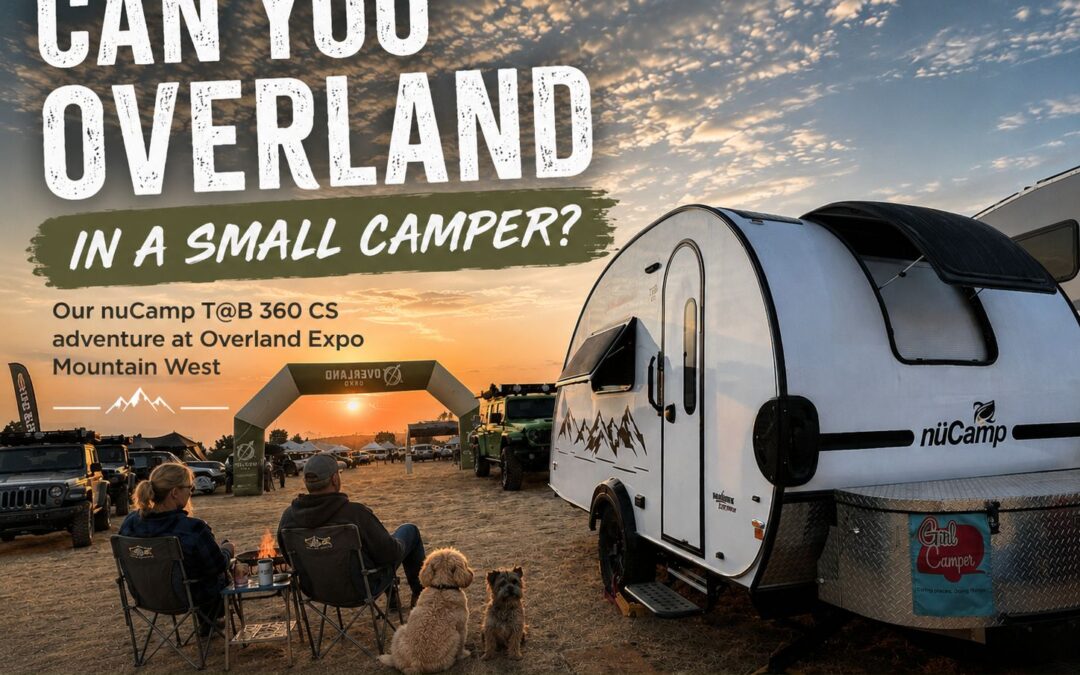
What exactly is overlanding?
That’s the question my husband Karl and I set out to explore when we packed up our nuCamp T@B 360 CS and headed from the Black Hills of South Dakota to Loveland, Colorado for Overland Expo Mountain West.
If you spend any time in the camping world right now, you’ve probably heard the term overlanding. Images of lifted trucks, rooftop tents, rugged trails, and remote campsites immediately come to mind. But after spending several days camping onsite at the expo with no hookups, talking to fellow travelers, and touring hundreds of rigs, I realized something important:
Overlanding means different things to different people.
The Journey Matters Just as Much as the Destination
At its core, overlanding is about self-reliant travel where the journey itself becomes part of the adventure. For some people, that means traversing technical backcountry trails in a heavily modified off-road vehicle. For others, it means loading up a motorcycle and heading wherever the road leads.
For us? It meant towing our nuCamp T@B 360 CS to Colorado, camping off-grid at the expo, and embracing the freedom that comes from being prepared and self-sufficient.
And honestly, that’s what I love most about overlanding. There’s no single “right” way to do it.
Camping Without Hookups at Overland Expo
We camped onsite at The Ranch during Overland Expo Mountain West, which meant no electrical hookups and no water hookups. Everyone there was relying on what they brought with them, whether they were sleeping in rooftop tents, vans, tricked-out Jeeps, or compact campers like ours.
The T@B 360 CS handled it beautifully.
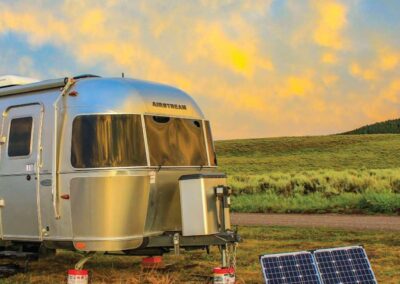
We arrived with fresh water tanks filled, propane ready for cooking, and solar power helping keep our lights and USB devices charged. I also brought along a portable Jackery power station for things like charging my laptop and making coffee in the morning.
One of the biggest misconceptions about overlanding is that it has to mean “roughing it.” But overlanding can absolutely include comfort too. That’s one reason I think small campers like the T@B 360 CS fit perfectly into this lifestyle.
At the end of a long day walking the expo grounds, we still had:
- A warm bed
- Our own bathroom
- A comfortable dinette
- Hot meals
- Shelter from changing weather
- Space for our dogs to relax
That balance between adventure and comfort is exactly why we love traveling this way.
Small Campers Belong in the Overlanding Community
One thing that stood out to me at the expo was how many manufacturers are now building campers specifically designed with overlanding in mind. Compact size, off-road tires, solar capability, rugged suspension packages, and efficient use of space are becoming more important than ever.
The nuCamp T@B 360 CS fits right into that trend.
Its smaller footprint makes it easier to tow into places many larger RVs simply can’t reach. It’s nimble, efficient, and capable of handling rough forest service roads while still giving you the comforts of a travel trailer.
During the expo, I interviewed fellow nuCamp ambassador Mandy Lee, who has spent nearly 10 years traveling full-time in small campers. Mandy shared something that really resonated with me: for her, the camper acts as a basecamp.
She and her husband can set up camp in a remote area, then use their truck to explore trails during the day before returning to a comfortable campsite at night. It’s a smart way to blend adventure with practicality.
Advice for New Overlanders
If you’re curious about overlanding but feel intimidated, you’re not alone. One of the best pieces of advice Mandy shared was simple:
Do your research.
Know the roads you’re traveling, understand weather conditions, and don’t assume every dirt road is easy to navigate. Apps like onX Offroad can help identify trail conditions, closures, and terrain difficulty before you head out.
And if you’re nervous? Start small.
You don’t need to drive across Alaska or tackle technical rock crawling trails to experience overlanding. A weekend boondocking trip on public lands or camping without hookups at an event can teach you a lot about self-sufficiency and confidence.
Traveling With Dogs on the Road
Of course, our two pups came along for the adventure too.
Traveling with dogs means planning ahead with water, food, and regular stops to stretch their legs. Our little dog Bandit is now 17 years old, blind, and deaf, but he still lights up when he realizes we’re heading camping.
That’s the beauty of this lifestyle. It’s not about perfection. It’s about creating memories together.
Overlanding Is What You Make It
After spending the weekend surrounded by adventurers from all over the country, I came away realizing that overlanding doesn’t have to fit into a single definition.
It can mean remote expeditions and technical trails.
Or it can simply mean freedom, self-reliance, community, and embracing the journey.
Whether you travel on two wheels, four wheels, or tow a camper like we do, there’s room for everyone in this community.
And honestly? That’s what makes it so special.
Watch the Full Video
Be sure to watch our full adventure at Overland Expo Mountain West on YouTube where we:
- Camp off-grid in the nuCamp T@B 360 CS
- Tour the expo
- Share overlanding tips
- Interview full-time traveler Mandy Lee
- Discuss how small campers fit into the overlanding lifestyle
And if you’re interested in joining the adventure, check out Girl Camper events happening all across the country.
Because life is better when we’re all out there going places and doing things.
What to learn more about Overlanding? Check our our podcast episode Exploring Overlanding With Azure O’Neil from Overland Expo
To learn more about the nuCamp Tab 360cs camper and check out nuCamp’s other models visit the nuCamp RV website.